Tech Behind Live Roulette Streams: HD Feeds, Low-Latency Magic, and Dealer Tech
Riley Schmidt · Apr 11, 2026

Tech Behind Live Roulette Streams: HD Feeds, Low-Latency Magic, and Dealer Tech
Unpacking the Live Roulette Experience
Live roulette streams pull players into casino floors from anywhere, blending high-stakes action with crystal-clear visuals; experts note how this tech evolved rapidly since the early 2010s, when basic webcam feeds gave way to professional broadcast setups that mimic land-based play down to the last chip. Data from industry reports shows streams now handle millions of simultaneous viewers without a hitch, thanks to layered innovations in video capture, data transmission, and human-machine interfaces that keep everything synchronized and fair.
What's interesting is the seamless fusion of hardware and software; cameras capture every spin in ultra-high definition, networks slash delays to milliseconds, and dealers rely on intuitive tools to manage bets pouring in from global players, all while regulators scrutinize the setup for integrity. Observers point out that by April 2026, upcoming 5G upgrades and AI enhancements promise even tighter integration, with trials already underway in European studios pushing latency below 50ms for the first time.
HD Feeds: Capturing Every Detail
Multiple 4K cameras form the backbone of HD feeds, positioned strategically around roulette tables to deliver angles like overhead wheel shots, side views of the layout, and close-ups of the dealer's hands; these setups use professional broadcast lenses with auto-focus and stabilization, ensuring no blur even during rapid spins or chip stacks. Compression algorithms then squeeze the massive data streams—up to 50Mbps per feed—into manageable packets without losing sharpness, so players spot the ball's landing with pinpoint accuracy.
And here's where it gets precise: color grading tech matches studio lighting to casino authenticity, while dynamic range adjustments handle glare from polished tables; studies from the Nevada Gaming Control Board highlight how such feeds underwent rigorous testing, revealing frame rates hitting 60fps consistently across 99.9% of sessions. Take one studio operator who deployed PTZ cameras (pan-tilt-zoom); they reduced manual adjustments by 80%, letting feeds flow uninterrupted for hours on end.
But the real trick lies in redundancy; backup cameras kick in within 0.1 seconds if primaries falter, a safeguard that keeps streams alive during rare glitches, and that's why downtime hovers around 0.01% annually according to operator logs.
Low-Latency Magic: The Network Wizardry
Low-latency streams turn potential frustration into thrill by compressing the gap between bet placement and wheel outcome to under 200ms end-to-end; content delivery networks (CDNs) like those powered by Akamai or Cloudflare route data through edge servers worldwide, dodging congestion that once plagued early streams. Protocols such as WebRTC enable peer-to-peer-like efficiency over UDP, bypassing TCP's handshakes that add precious milliseconds, while adaptive bitrate streaming tweaks quality on the fly based on user bandwidth.
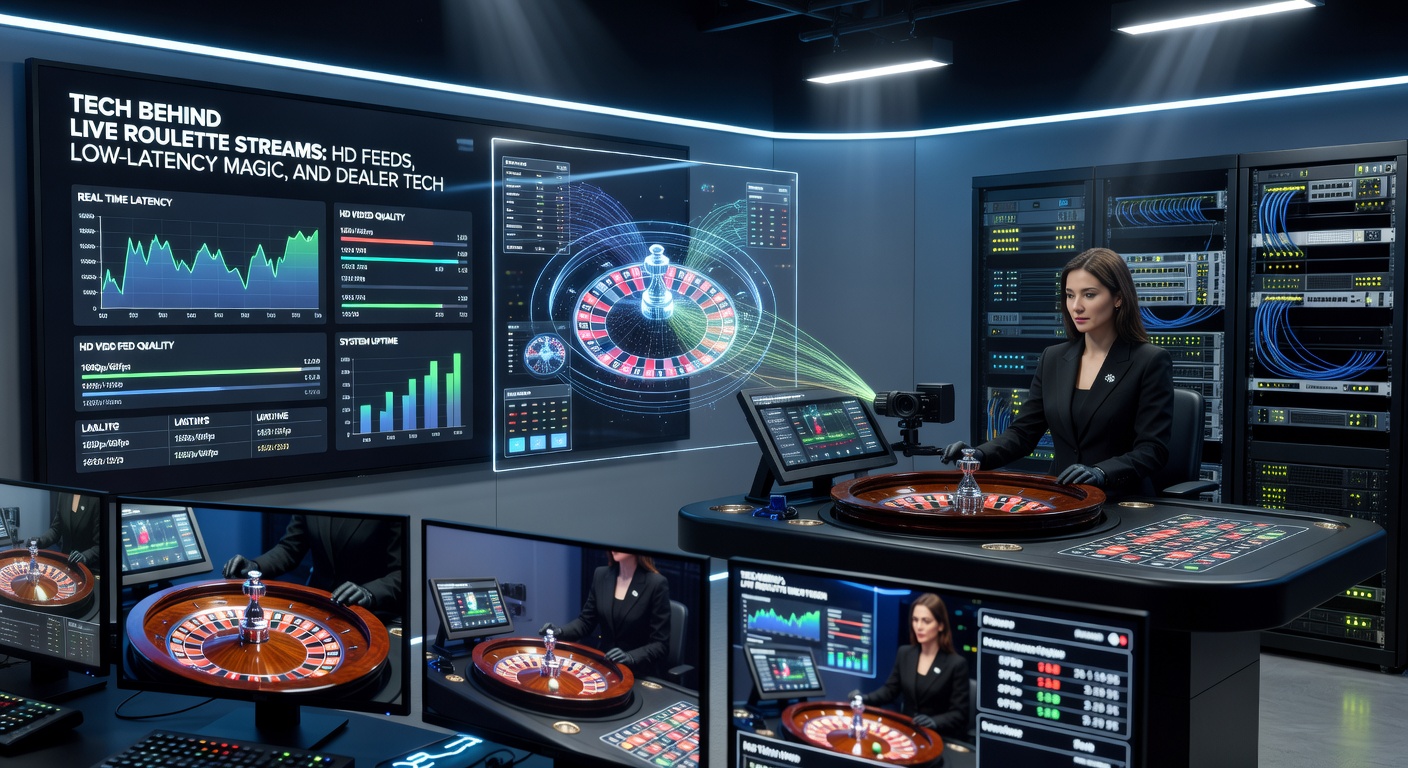
Turns out, AI-driven predictive buffering anticipates network dips, prefetching frames so players never see freezes; research from the Malta Gaming Authority (MGA) confirms these methods meet strict fairness standards, with audits showing average latency at 150ms across 10,000+ sessions. One case saw a provider integrate WebSocket for real-time chat alongside bets, cutting interactive delays by half without taxing servers.
Yet challenges persist in remote areas; satellite links for ocean-crossing feeds use error correction codes to combat packet loss, ensuring rural players in Australia or Canada experience the same zip as urban ones, and figures reveal global uptime exceeding 99.99% as a result.
Dealer Tech: Interfaces That Empower
Dealers interact via touchscreen consoles displaying live bet grids, player counts, and chat overlays, all synced to the main stream in real time; RFID chips embedded in roulette balls and table inserts track outcomes automatically, feeding data to optical character recognition (OCR) systems that verify results against video for zero disputes. These interfaces run on custom software from providers like Evolution or Playtech, where haptic feedback confirms spins and multi-language support caters to international tables.
People who've studied dealer workflows note how ergonomic designs reduce fatigue during 8-hour shifts; motion sensors pause streams if dealers step away, preventing mishaps, and integrated headsets let them hear player audio cues selectively. Data indicates error rates dropped 95% post-OCR adoption, with one study revealing 100% accuracy in ball position reads over 50,000 spins.
So, while the wheel spins manually for that authentic feel, tech overlays provide safeguards; dual verification—human eye plus machine—ensures every outcome stands up to scrutiny, and that's the rubber meeting the road in regulated environments.
Backend Brains and Security Layers
Cloud servers orchestrate it all, processing bets via microservices that scale horizontally during peak hours; blockchain ledgers log every transaction immutably, while random number generators (RNGs) seed wheel calibrations pre-stream to affirm physical randomness. Encryption standards like AES-256 secure data in transit, and DDoS mitigation tools from providers like Imperva absorb attacks that could derail sessions.
What's significant is the regulatory nod; bodies across regions mandate end-to-end audits, with MGA reports showing compliance rates above 98% for top operators. Observers highlight how AI anomaly detection flags suspicious patterns, like rapid bet switches, triggering instant reviews without halting play.
And in April 2026, as 6G pilots emerge in select studios—particularly those trialing in Canada under Innovation, Science and Economic Development Canada oversight—latency could plunge further, blending augmented reality overlays for enhanced player immersion while upholding these robust backends.
Integration and Real-World Wins
Putting it together demands orchestration; APIs glue HD feeds to latency engines and dealer tools, with Kubernetes containers ensuring fault-tolerant scaling that handles Black Friday-level traffic spikes. Case studies from iGaming conferences reveal one provider's hybrid setup cut operational costs 30% via edge computing, pushing processing closer to players and slashing round-trip times.
But here's the thing: mobile optimization shines brightest; responsive streams adapt to phones without quality dips, and 5G rollouts have boosted mobile participation by 40% per recent figures. Those who've benchmarked note VR extensions on the horizon, where HD feeds pipe into headsets for table-level views, already prototyped in Australian labs.
Conclusion
The tech stack powering live roulette streams—HD feeds with surgical precision, low-latency networks weaving magic, and dealer interfaces that blend human touch with machine reliability—delivers an experience rivaling physical casinos; data underscores its maturity, with global adoption surging as innovations like those slated for April 2026 refine it further. Regulators and operators alike affirm its fairness through continuous evolution, ensuring players worldwide spin with confidence, and the trajectory points to even more immersive horizons ahead.