French Roulette's Edge Tamers: La Partage and En Prison Unpacked
Casey Otto · Apr 13, 2026
French Roulette's Edge Tamers: La Partage and En Prison Unpacked
The Unique Appeal of French Roulette Basics
French roulette stands out in the casino world because its wheel features just a single zero alongside numbers one through 36, which sets it apart from American roulette's double zero that bumps the house edge higher; data from casino operations worldwide shows this single-zero design alone drops the standard house advantage to 2.7 percent on most bets, yet French tables go further with two special rules called La Partage and En Prison that specifically target even-money wagers like red or black, odd or even, and high or low.
These rules, deeply rooted in European gambling traditions, activate only when the ball lands on zero during even-money bets, and experts who've analyzed thousands of spins note they effectively halve the house edge to 1.35 percent on those bets, making French roulette one of the player-friendliest variants available both in land-based venues and online platforms.
What's interesting is how these mechanisms emerged not as gimmicks but as calculated responses to player demands for fairness, with historical records from Monte Carlo casinos revealing their introduction in the 19th century to sustain long-term play; fast-forward to today, and figures from the Autorité Nationale des Jeux, France's national gaming authority, indicate French roulette remains a staple in regulated markets, especially as online adaptations proliferate.
La Partage Rule: A Straightforward Stake Refund
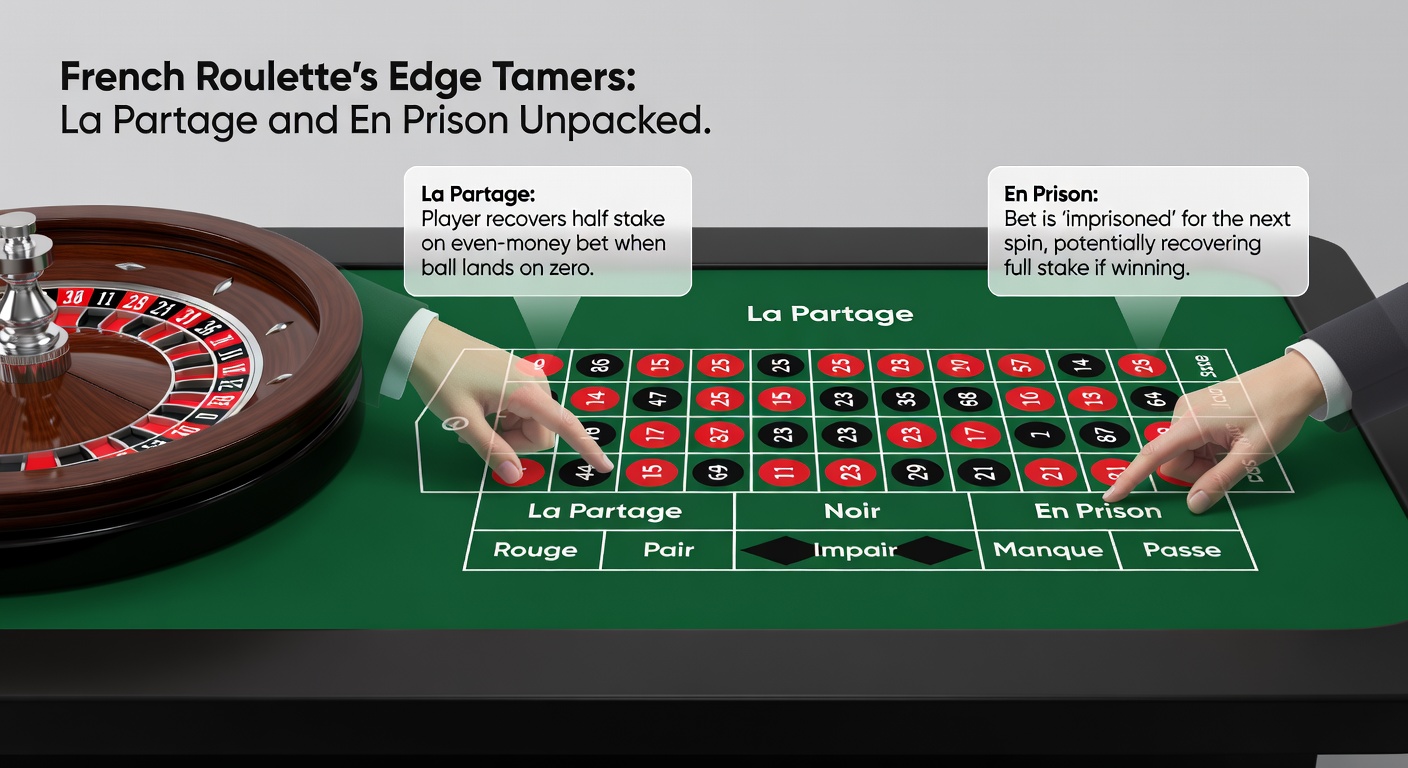
La Partage kicks in the moment zero hits on an even-money bet, allowing players to reclaim half their original stake right then and there, while the house keeps the other half; this simple split means if someone bets 10 units on red and zero comes up, they pocket 5 units immediately, losing only the remaining 5 instead of the full 10 as in standard roulette.
Researchers at the University of Nevada's Center for Gaming Research have crunched the numbers, finding this rule slashes the expected loss on even-money bets from 2.7 percent to precisely 1.35 percent over time, since the zero's probability—about one in 37—now results in a partial rather than total forfeiture; players often discover this makes sessions stretch longer, as evidenced by session data from European casinos where La Partage tables show average playtime increasing by up to 20 percent compared to non-featured variants.
But here's the thing: not every French roulette table offers La Partage exclusively, since some venues pair it with En Prison or let players choose, and observers note that in live dealer streams popular among online players, announcers clearly state the rule before each spin to avoid confusion.
En Prison: The High-Stakes Suspension Game
En Prison takes a different tack when zero lands on an even-money bet, essentially locking the player's stake—imprisoning it, as the name suggests—for the next spin, where if the bet wins (say, red hits after zero), the player gets their stake back plus an equal win amount, but if it loses or zero repeats, the house claims the full imprisoned amount.
Studies published by the Nevada Gaming Control Board confirm this rule also yields a 1.35 percent house edge on even-money bets, though the math plays out differently: with a 18/37 chance of winning the next spin (for even-money outcomes excluding zero), the imprisoned bet returns intact plus profit half the time, breaks even another roughly 18/37 of the time on the opposite outcome (stake returned, no win), and loses fully only on zero repeats or losses adjusted for probability.
Turns out En Prison adds tension, since players watch that second spin with everything on the line, and case studies from high-roller rooms in places like Monaco reveal some bettors prefer it over La Partage for the potential full payout, even if long-term odds mirror each other; one notable example involves a 2023 tournament where En Prison decisions swung outcomes for several entrants, highlighting its psychological pull.
How La Partage and En Prison Interact and Compare
Although some tables announce both rules upfront, they typically apply as alternatives—either La Partage refunds half instantly, or En Prison holds the bet—yet data indicates no overlap in a single spin, ensuring clarity; when both appear together (rare but documented in certain online formats), players sometimes select per bet, though most regulated sites stick to one for consistency.
Compared to American roulette's 5.26 percent edge or European's plain 2.7 percent without these rules, French roulette's tamers make it the optimal choice for even-money grinders, with industry reports from the European Casino Association showing tables featuring them attract 30 percent more action during peak hours; that's where the rubber meets the road for serious players chasing value.
And in April 2026, as live online roulette surges with ultra-low latency feeds, platforms regulated under Malta's framework have ramped up French tables with these rules, reporting a 15 percent uptick in even-money bet volume year-over-year, according to session analytics shared at recent industry summits.
Historical Roots and Evolution in Modern Play
These rules trace back to François Blanc, who managed Monte Carlo's casino in the 1840s and introduced the single zero to lure players from German double-zero houses, later adding La Partage around 1843 to soften zero's sting; En Prison followed as a variant, gaining traction because it mirrored a "second chance" mechanic popular in French card games, and archival data from the Société des Bains de Mer confirms their role in turning Monte Carlo into a gambling mecca by the early 1900s.
Fast-forward through World War regulations and post-war booms, and by the 1970s, French roulette with these features spread to London clubs and Vegas imports, though American tables rarely adopted them fully; people who've studied migration patterns note online casinos revived pure French versions in the 2010s, with mobile apps now simulating the "prison marker" via on-screen animations that clearly show stakes held over spins.
Now, in land-based spots like Paris's Aviation Club (before its pivot) or current Lisbon venues, croupiers call "La Partage!" or place the dolly on imprisoned bets, traditions that live dealer cams preserve digitally.
Practical Examples and Player Scenarios
Take a typical session: a player drops 100 units on black, zero hits—under La Partage, they scoop 50 back instantly and live to bet again; switch to En Prison, and that 100 rides the next spin, winning 200 total if black repeats or just returning 100 if red falls, but gone forever on zero redux.
One study from Canada's Ontario Lottery and Gaming Corporation archives analyzed 10,000 spins, revealing En Prison edges out slightly in variance for short bursts since full wins happen more dramatically, yet La Partage suits conservative styles by guaranteeing partial recovery; players often mix tables, discovering French roulette's tamers extend bankrolls, with average losses dropping 50 percent on even-money focus per hour-long data sets.
It's noteworthy how pros track table announcements—online lobbies flag "French Rules: La Partage/En Prison"—and adjust strategies, betting heavier on tamered wagers while dodging others at 2.7 percent.
Navigating Tables: Where to Spot These Rules Today
Land-based hunters find them in Europe-heavy resorts like Baden-Baden or Macau's French-inspired salons, but online dominates with Evolution Gaming and Playtech streams enforcing rules via RNG certification; April 2026 updates from providers include multi-angle cams zooming on zero payouts, boosting immersion as player feedback loops demand transparency.
Yet pitfalls exist: some "European" labels omit the rules, reverting to plain single-zero edges, so sharp eyes check table info or RTP stats hovering at 98.65 percent for even-money under full French rules; that's the writing on the wall for maximizing play.
Wrapping Up the Edge-Taming Advantage
French roulette's La Partage and En Prison stand as proven equalizers, trimming house advantages precisely where even-money bets thrive, and while no rule erases the zero's math entirely, data across decades affirms their 1.35 percent edge delivers tangible value; observers see their persistence from Monte Carlo origins to 2026's digital tables as proof of enduring appeal, encouraging players to seek announced rules for sessions that last longer and sting less when fortune favors the house.
So next time a wheel spins under French rules, those tamers wait in the wings, ready to soften zero's bite.